
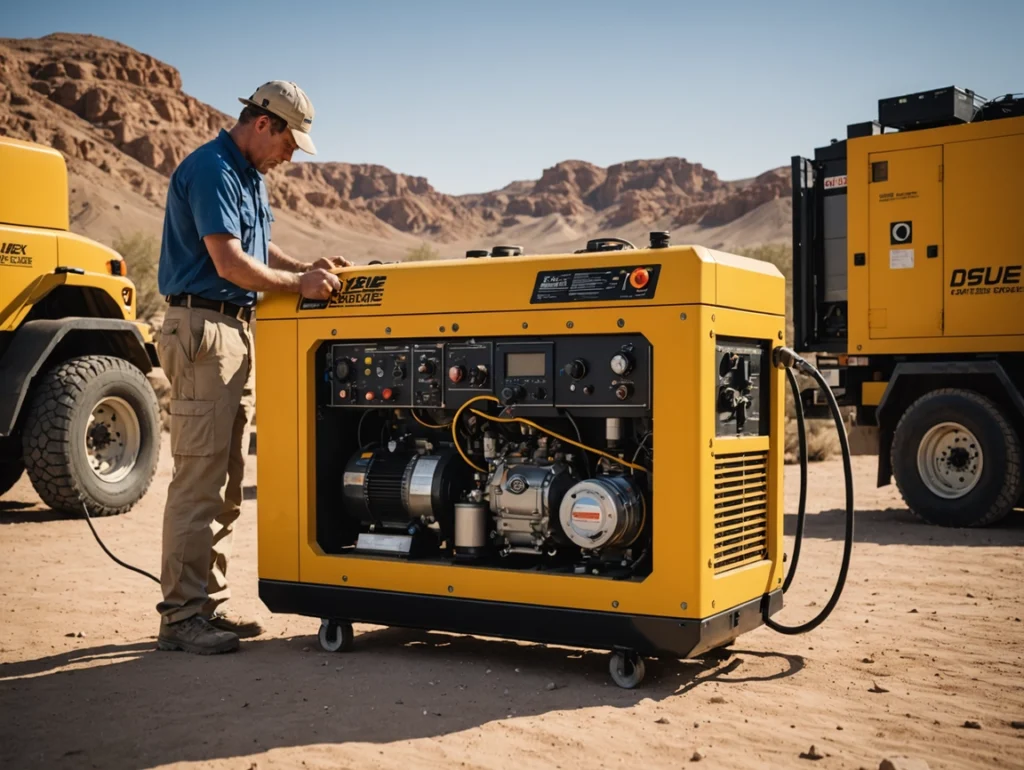
In Saudi Arabia, when the summer peak hits, the ambient temperature can soar past 50°C. For your mobile generators, this is the ultimate stress test. Whether powering a remote construction site in NEOM or a hospital in Riyadh, a generator shutdown during these months isn’t just an inconvenience—it’s a safety hazard and a massive financial loss.
At GCC Olayan, we see a spike in emergency service calls every June and July. The vast majority of these breakdowns are preventable.
In partnership with Atlas Copco, the world leader in portable energy, we have compiled the definitive 11-Point Summer Readiness Checklist. Review these items today to ensure your power supply stays uninterrupted.
The “Summer Ready” Checklist
1. Fuel Filtration Strategy
High humidity and temperature fluctuations cause condensation to form inside fuel tanks.
- The Risk: Water entering the fuel system can shatter injector tips and cause immediate failure.
- Action: Drain the water separator daily. Replace fuel filters now, before the season peaks.
2. Inspect the Air Filter
Summer brings dust storms (shamal). A clogged air filter chokes the engine, causing it to run hot and burn more fuel.
- Action: Check the safety cartridge daily. Never blow compressed air through a filter to clean it (this creates micro-tears). If the indicator is red, replace it with a genuine Atlas Copco element.
3. Verify Oil Viscosity
Heat thins engine oil. Old or incorrect oil cannot maintain the necessary film thickness to protect bearings.
- Action: Ensure you are using high-performance engine oil rated for high ambient temperatures. Check your manual—you may need to switch viscosity grades for the summer months.
4. Check Tension Belts
Rubber belts degrade faster in extreme heat, becoming brittle and prone to snapping.
- Action: Inspect fan belts for cracks or fraying. Keep a spare set on-site; a snapped fan belt leads to instant overheating.
5. Coolant Quality & Level
This is the heart of your thermal defense.
- Action: Don’t just top up with water. Ensure the coolant mixture is at the correct water/glycol ratio (usually 50/50) to raise the boiling point. Top up the level to the “Max” line.
6. Clean the Exhaust Manifold
Dry leaves, paper, or oily rags trapped near the exhaust can ignite easily when the manifold reaches operating temperature.
- Action: Perform a visual inspection and clear all debris from the engine compartment.
7. Inspect Battery Health
Heat evaporates battery electrolytes faster than you think, leading to “dead on arrival” starts.
- Action: Check electrolyte levels on non-maintenance-free batteries. Clean terminals of corrosion, which adds resistance and heat.
8. Vibration Dampers
Rubber mounts (dampers) harden and crack in the heat.
- Action: Inspect the engine and alternator mounts. Failed dampers transmit vibration that can crack metal brackets and loosen electrical connections.
9. Radiator Hygiene
A radiator clogged with oil mist and sand cannot shed heat.
- Action: Clean the radiator fins carefully using low-pressure water or air. Ensure airflow is unobstructed.
10. Alternator Insulation
Dust buildup inside the alternator acts as an insulating blanket, trapping heat and degrading electrical windings.
- Action: Blow pressurized air through the alternator vents to dislodge dust. Check insulation resistance if the unit has been sitting idle.
11. Hoses and Lines
Rubber fuel and coolant hoses become hard and brittle in the Saudi sun.
- Action: Squeeze the hoses. If they feel crunchy or show visible cracks, replace them immediately to prevent a catastrophic coolant leak.
Download the Official Guide
Don’t rely on memory. Download the full detailed guide directly from Atlas Copco to print and hand to your maintenance team.
Download the Summer Service Tips Guide
Need Parts Fast?
If your inspection reveals worn belts, filters, or hoses, contact GCC Olayan Parts Department immediately. We stock genuine Atlas Copco “Service Kits” containing everything you need for a scheduled service in one box.
Contact Parts: +966 13 882 0888