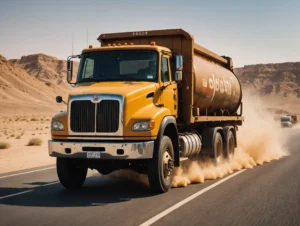
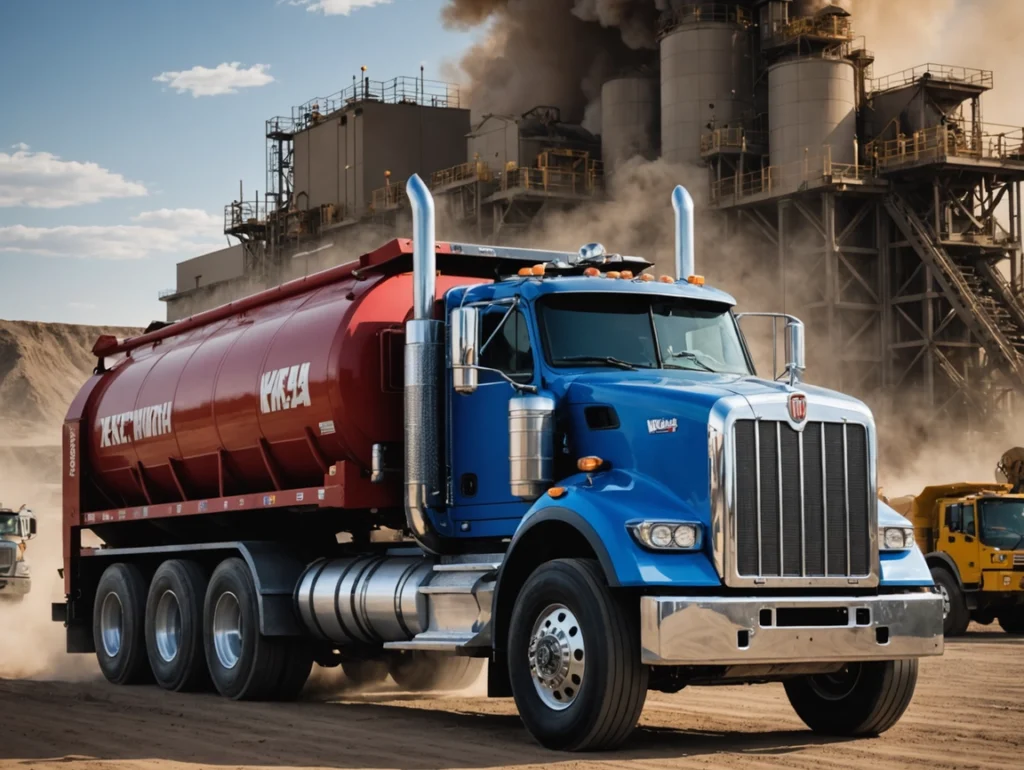
In the vast oil fields of the Eastern Province and the rugged construction sites of the Red Sea coast, the Kenworth T880 and C500 are legends. They are chosen for one reason: they can move massive loads where other trucks fail.
Powering these beasts is the PACCAR MX-13, an engine known for its high torque and durability. However, operating a Kenworth in a “Vocational” setting (heavy haulage, off-road, high idle) requires a completely different maintenance mindset compared to standard highway transport.
At GCC Olayan, we often see fleets applying “Line Haul” maintenance schedules to “Severe Service” trucks. This mistake can cut engine life in half. Here is the correct way to maintain your PACCAR MX-13 for Saudi Arabia’s toughest jobs.
1. Forget Kilometers: Watch the Hours
In heavy haulage and oil field support, trucks spend 40-50% of their life idling or moving at crawl speeds.
- The Trap: Changing oil every 40,000 km might seem frequent, but if that truck idled for 600 hours to cover that distance, the oil is already dead.
- The Fix: For Severe Service applications (gross weight > 40 tons or frequent off-road use), you must switch to an Hour-Based Schedule.
- Recommendation: Change oil and filters every 800 Hours or 24,000 KM, whichever comes first. In Saudi summer heat, sticking to the hour meter is critical to prevent viscosity breakdown.
2. The Fuel System Defense
The PACCAR MX-13 uses a high-pressure common rail fuel system that is incredibly efficient but sensitive to contamination. Saudi Arabia’s fine dust (fines) can bypass inferior filters.
- The Rule: Always change the Chassis Fuel Filter (Primary) and the Engine Fuel Filter (Secondary) at the same time.
- Why: The primary filter captures water and large debris, while the secondary filter catches microscopic particles. Changing only one puts stress on the high-pressure fuel pump, which can cost thousands to replace.
3. The Critical Valve Lash Adjustment
This is the most skipped maintenance item we see in the field.
- The Requirement: The PACCAR MX-13 requires a “Initial Valve Lash Adjustment” at roughly 40,000 Miles (64,000 KM) or 1,200 Hours.
- Why it Matters: As a new engine “breaks in,” the valve train components settle. If you skip this initial adjustment, the valves can become too loose (losing power/noisy) or too tight (burning valves).
- Interval: After the first adjustment, it is generally required every 160,000 miles (approx. 250,000 km) or 4,500 hours.
4. Coolant Filter Awareness
Unlike some older engines, the MX-13 coolant filter is not just a rock catcher; it often contains Supplemental Coolant Additives (SCAs) to prevent liner pitting.
- The Fix: Change the coolant filter at every oil change interval (800 hours) to ensure the chemical balance of your cooling system remains capable of fighting corrosion in 50°C heat.
Download the Official PACCAR Guide
These numbers aren’t suggestions; they are the engineering requirements for warranty and longevity.
We have uploaded the official PACCAR MX-13 Maintenance Guide to our resource library. It contains the exact fluid capacities, filter part numbers, and “Severe Duty” definitions you need to train your team.
Download PACCAR MX-13 Maintenance Guide
GCC Olayan Service Note:
Do you have a fleet of Kenworths approaching the 1,200-hour mark? Contact our Service Department to book your certified Valve Lash Adjustment today. Our technicians use factory tooling to ensure precise calibration.
Contact Service: +966 13 882 0888